

The Ready-Made Collection: Variants, Stock, and What the Cart Does
Not every project needs decoration. Buying catalog products directly is also the cheapest way to test a blank before you commit a design to it.
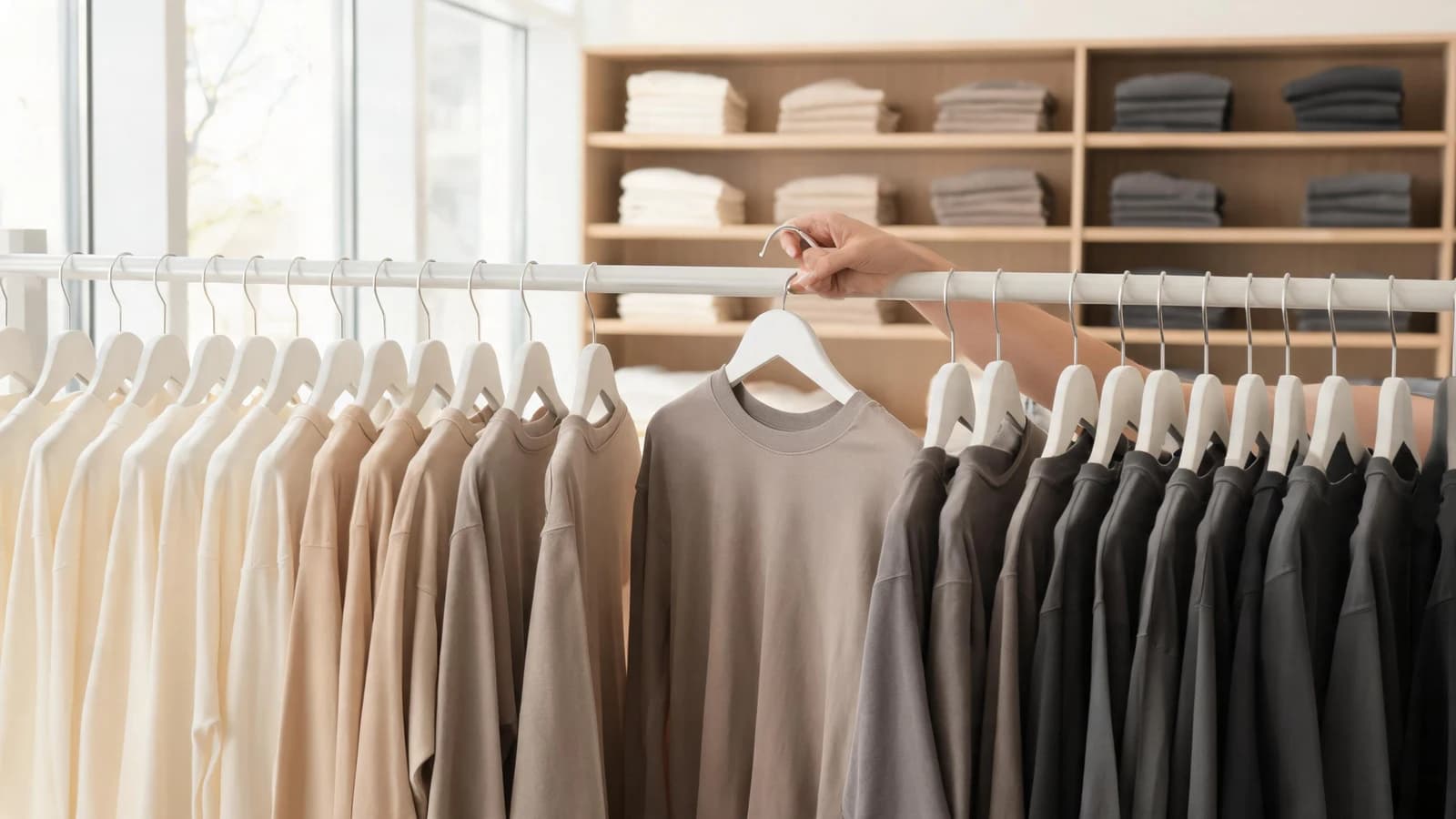
Not every apparel project needs decoration. Sometimes you need finished goods, in known sizes, without a design process attached—and the fastest route is simply to buy them.
The Ready-Made Collection is that route. It is also, less obviously, the cheapest way to answer a question that customization cannot answer on a screen: what does this garment actually feel like?
When is buying ready-made the better decision?
Whenever the value you need is in the garment rather than in the artwork.
- You need stock now and the design work is not the bottleneck.
- You want to evaluate a blank in person before committing a design to it.
- You are testing fit and sizing before choosing a size run for a production order.
- The product simply does not need decoration.
Buying a garment to hold in your hands is a legitimate step in a customization project, not a detour from one.
A product is a set of variants, not one item
What you add to the cart is a specific variant, not a product in general.
Catalog products carry their options as attributes—size and color being the common pair. Each combination is its own orderable unit with its own stock. This is why selecting a size and a color is required before an item can be added: without a complete selection there is no actual thing to buy.
The same structure carries through the rest of the system. When a custom request references a catalog product, it references a variant, and that variant is what the quote and order are built on.
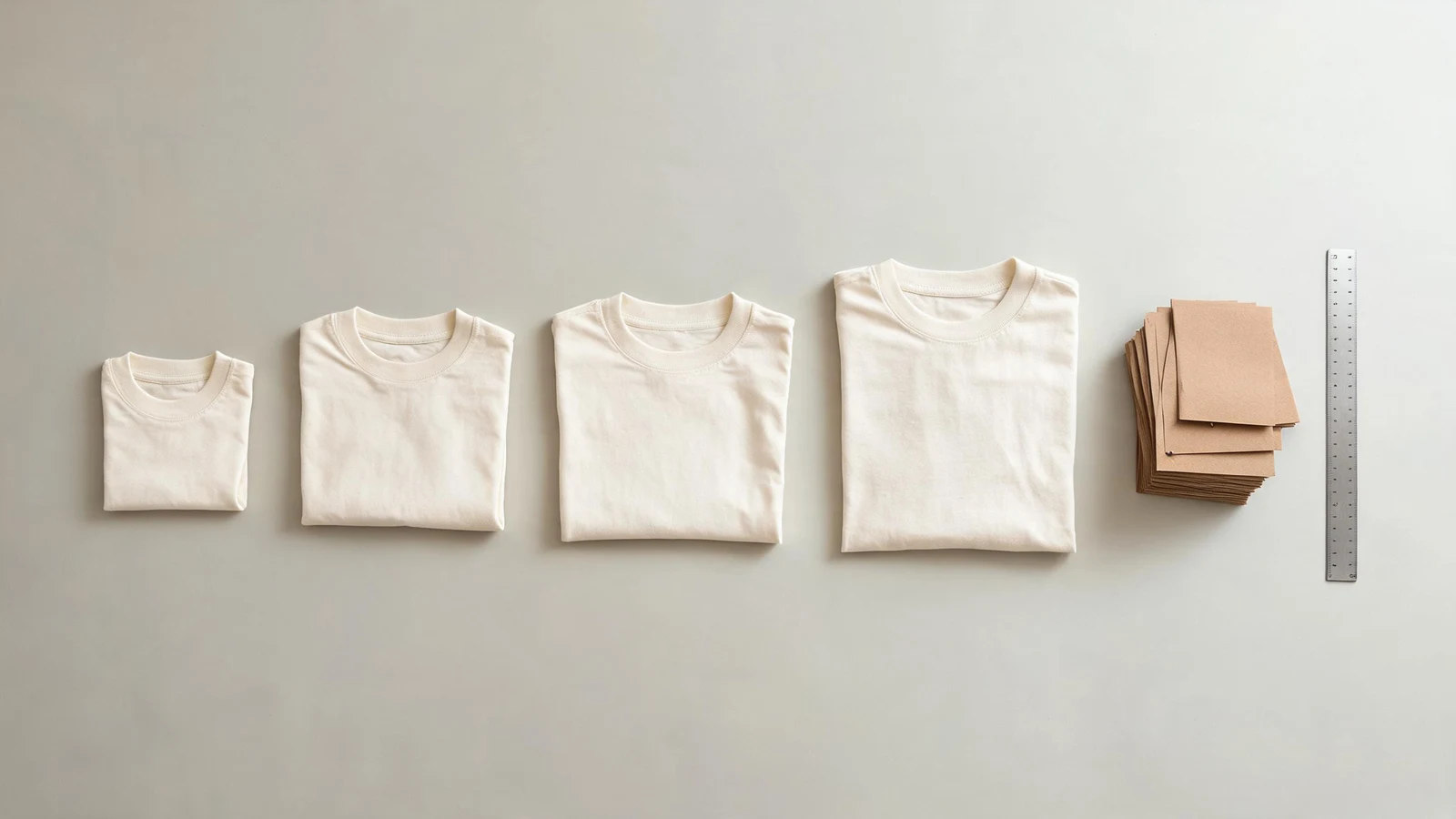
Stock is checked more than once
Availability is verified when you add an item, when you change its quantity, and again when the order is created.
The repetition is deliberate. Stock is shared across everyone browsing at the same time, so a quantity that was available when you added it can be gone twenty minutes later. Checking only at the start would let orders be created against inventory that no longer exists.
If a quantity is rejected at checkout that was accepted earlier, nothing has malfunctioned—the stock position changed in between.
The cart holds intent, not inventory
Adding an item to the cart does not reserve it.
A cart records what you intend to buy. Inventory is only committed when an order is actually created. For anything scarce or seasonal, this is the practical consequence: a long-parked cart is not a claim on stock, and the way to secure goods is to complete the order.
Direct purchases and Custom Requests are different objects
A direct purchase becomes an order immediately. A Custom Request is priced first, and only becomes a Product Order once a quote is accepted.
They are separate paths with separate lifecycles, and both appear in your account. Do not create a custom request for goods you simply want to buy as-is—it adds a pricing cycle to a decision that does not need one.
Use ready-made to de-risk a customization
Here is the most useful pattern for a brand in its first season: buy the blank first, then design on it.
A physical garment answers the questions a preview cannot—hand feel, real color under real light, how the fabric drapes, whether the fit matches the size chart. Those answers directly improve the next custom request, because the blank is the foundation everything else is printed on.
If you are still deciding which blank to build on, Choosing the Right Garment Blank covers what to look at before you buy.
Frequently asked questions
- Does adding an item to the cart reserve stock?
- No. A cart records what you intend to buy. Inventory is only committed when an order is actually created, so a long-parked cart is not a claim on scarce or seasonal stock.
- Why was my quantity rejected at checkout when it was available earlier?
- Availability is checked when you add an item, when you change its quantity, and again when the order is created. Stock is shared with everyone browsing at the same time, so the stock position simply changed in between.
- Should I buy a blank before ordering a custom print?
- It is often the cheapest way to de-risk the project. A physical garment answers what a preview cannot — hand feel, real color under real light, drape, and whether the fit matches the size chart — and those answers improve the custom request that follows.