

Payment Methods and Surcharges: A Beginner's Checkout Guide
Learn why payment choices depend on country, currency, amount, and current configuration—and how a method-specific surcharge changes the final charge.

The payment page is not a static list of every method a platform has ever integrated. It is a live decision based on the thing you are paying for, the transaction currency and amount, your shopping country, the enabled configuration, and each provider's current availability.
Payment method and provider are different concepts
A payment method is what the customer recognizes, such as a card or a local wallet. A payment provider is the service that processes that method. Labelix presents one method list rather than asking you to choose a provider first.
The configured display name is the customer-facing label. Provider availability is checked behind the list, so an enabled method is shown only when it is currently eligible for the transaction.
Why the list can change
Availability can depend on:
- What you are paying for: an order, wallet top-up, or customization consultation.
- Shopper country.
- Transaction currency.
- Final amount.
- Current administrator configuration.
- The provider's live response.
A method appearing on one purchase does not guarantee it will appear on another. If a live availability check fails, that provider's methods fail closed rather than showing choices that may not work.
What a payment surcharge is
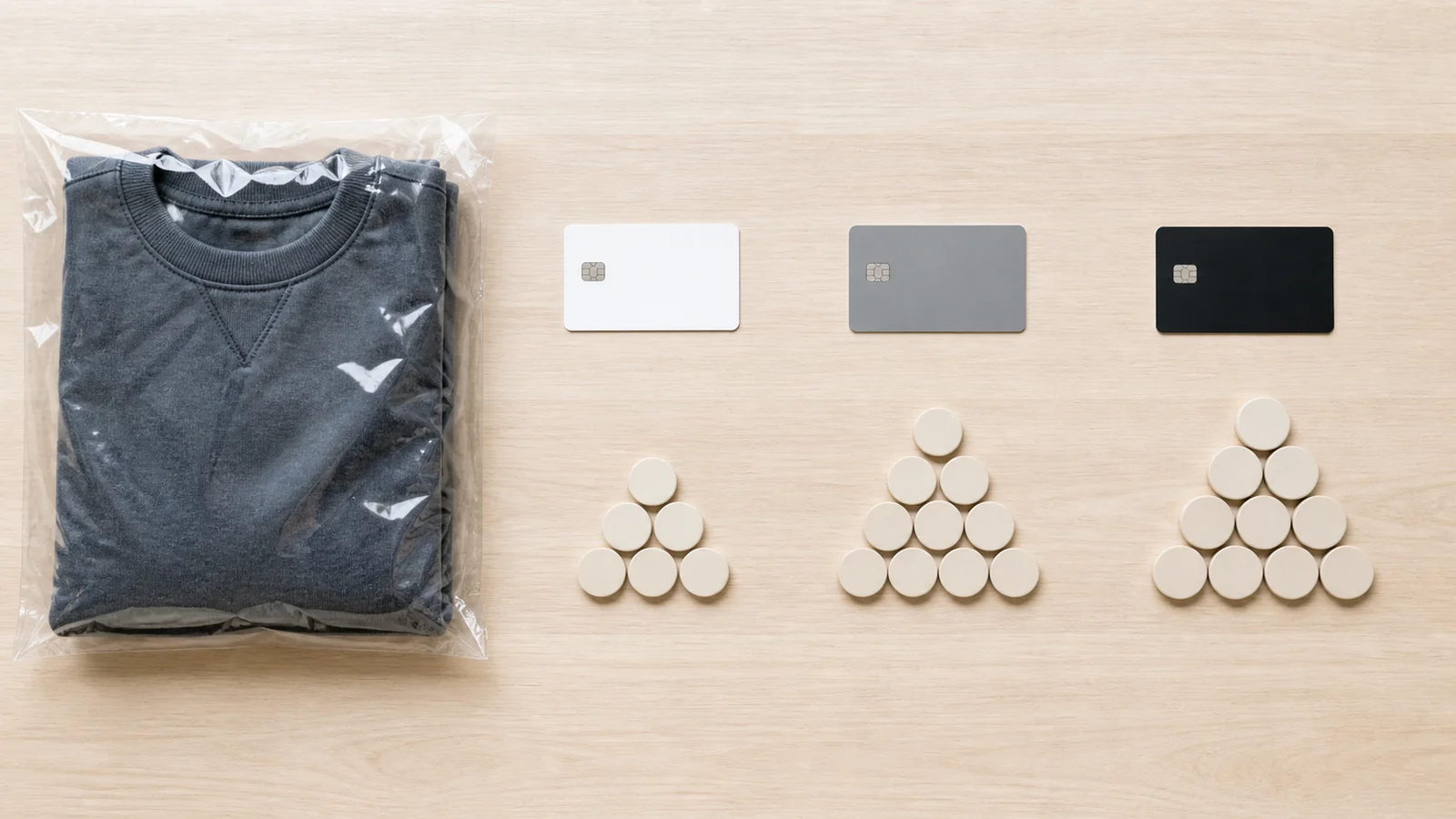
A payment surcharge is an additional charge associated with the selected method. It can combine a percentage and a fixed amount according to current configuration. Some methods inherit the provider-level rule; another can have its own override, including zero.
The surcharge base for an order is:
Goods and customization subtotal + shipping fee + shipping insurance.
This means you cannot compare method totals accurately until the order, shipping, and insurance amounts are known.
Method selection happens before provider checkout
The payment flow has two practical stages. First, you select one available method and review its final charge. Then Labelix creates or resumes the provider checkout for that method. Some methods open a hosted checkout; others can use an embedded experience.
Do not open several methods in parallel to see which finishes first. One business payment can have multiple attempts over time, but only one successful settlement should grant the order or wallet entitlement.
Address requirements vary by method
Some methods require a billing address. When they do, the payment page loads an owned active address and validates it again at confirmation. For an order, the saved delivery snapshot can be displayed as the immutable address context. Other payment methods do not need a billing address at all.
Review the final charge, not only the method name
Before continuing, confirm the currency, base amount, shipping and insurance lines, method surcharge, and final amount. A familiar method is not automatically the cheapest one, and the lowest surcharge is not automatically the best choice if it is unavailable in your region or has a different customer flow.
Method availability and provider activation can change. Treat the choices shown on the current payment page as the authoritative list for that transaction.
Frequently asked questions
- Why do I see different payment methods on different purchases?
- The list is resolved for the current business object, shopper country, currency, amount, enabled configuration, and each provider's live availability. A method valid for one transaction may not qualify for another.
- What amount is used to calculate an order payment surcharge?
- The surcharge base includes the goods and customization subtotal, shipping fee, and shipping insurance. The payment page then shows the selected method's final charge.
- Does every payment method require a billing address?
- No. Address requirements come from the selected method's capability. The page asks for or shows an address only when that method requires one and revalidates the selected saved address at confirmation.