

How Custom Apparel Quotes and Pricing Work
Learn which product, quantity, craft, print-area, shipping, and request details shape a Labelix quote—and why the published quote is the source of truth.
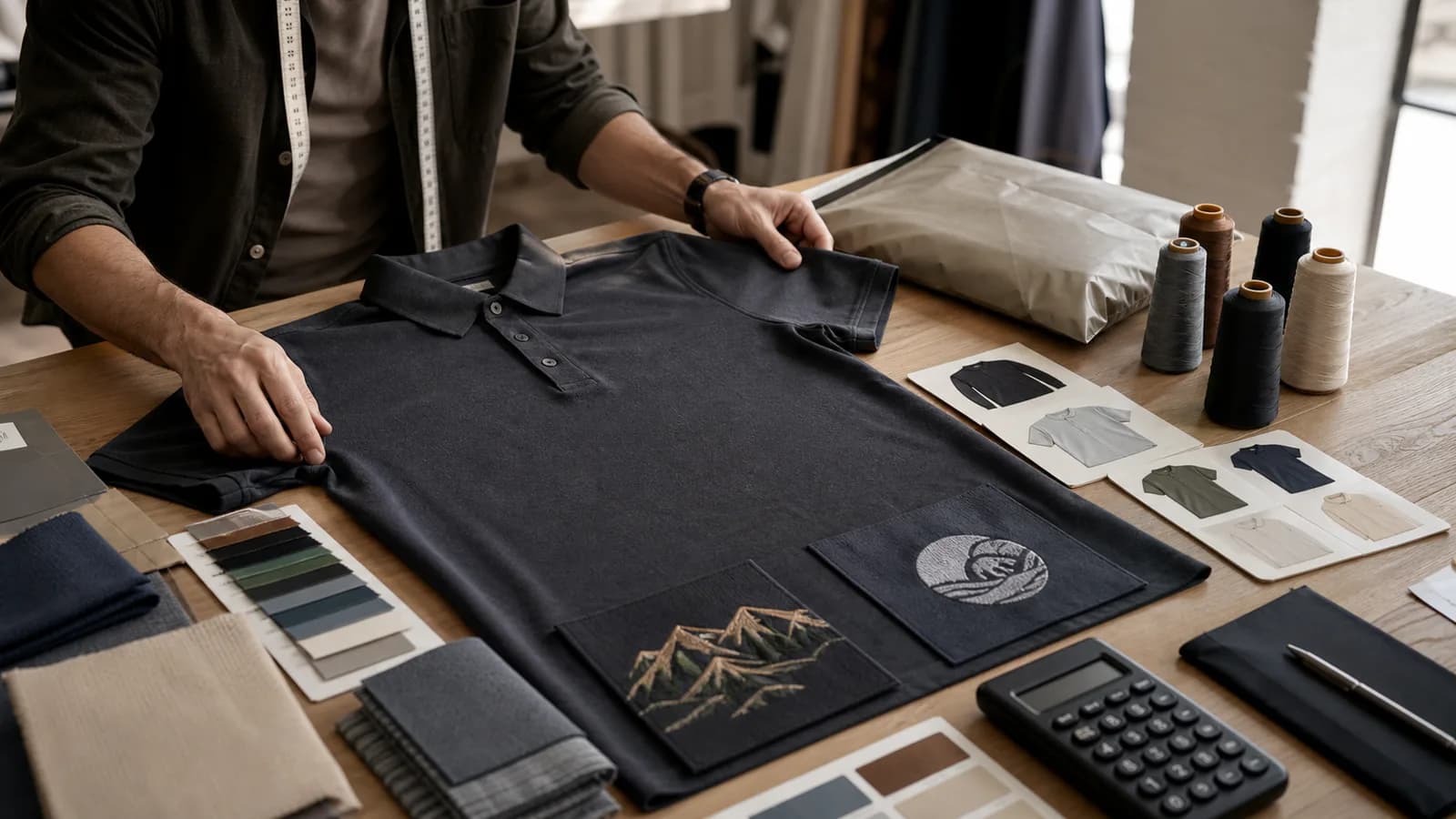
A custom apparel price is the result of a specific product and production plan. Two garments that look similar in a mockup can require different materials, decoration methods, print areas, quantities, and shipping arrangements.
A useful quote therefore does more than show a total. It connects the amount to the request that will be produced.
The base product sets the foundation
When customization begins from a catalog product, the selected product and SKU establish important context such as the garment variant and available pricing. When a request begins from Free Customization, the product category, desired quality, target, references, and notes help define the sourcing requirement.
Changes to the base product can change more than the garment cost. Fabric construction, weight, dimensions, and available surfaces may affect decoration and logistics as well.
Quantity changes the production plan
Expected quantity helps determine which configured pricing range applies and whether the selected craft is practical for the request. Setup-heavy methods and small-batch-friendly methods behave differently as quantity changes.
Enter the quantity you genuinely expect to order. An unrealistically high number may produce a quote that does not represent the project you are ready to approve, while an artificially low number can hide the intended production scale.
Where MOQ enforcement is enabled, a craft-specific minimum may restrict an undersized request. If it is not enabled, the configured MOQ can remain informational rather than a blocking rule. The actual quote—not a general marketing statement—shows what applies to the request.
Every print has its own cost context
A garment can contain multiple surfaces and multiple prints per surface. Each print may carry its own artwork, craft, area, and configured quantity-band pricing.
A small embroidered chest mark and a large printed back graphic should not be treated as one decoration line. Their materials and production logic differ even when they belong to the same garment.

Print area matters because a larger application generally consumes more material and machine time. Craft selection matters because embroidery, flat print, raised texture, foil, or specialty effects use different processes. Combining several techniques can add value, but it also creates additional quote lines that should be reviewed independently.
Samples and minimums depend on current settings
Some crafts can define a sample fee or minimum quantity. Labelix controls whether MOQ enforcement and sample-fee charging are active through system pricing settings.
That means you should not assume that every craft always charges a sample fee—or that a displayed craft minimum always blocks checkout. When an eligible sample fee is enabled, it is converted through the same pricing rules used for the quote rather than copied directly from an internal procurement amount.
Shipping is part of the accepted total
A product subtotal is not the final delivered amount. The quote or checkout process uses the selected delivery context to calculate shipping. Current surcharge settings may also apply.
The final total follows the accepted pricing snapshot:
Product and customization subtotal + shipping fee + applicable surcharge = total amount
Destination, parcel weight and dimensions, shipping method, and current logistics responses can affect delivery cost. Recalculating shipping may therefore change the payable total before acceptance.
Customs duties and import taxes are separate from the platform's quoted shipping fee when destination authorities assess them. Review the Shipping Policy for customer responsibilities and service terms.
Automatic and manual quotes serve different requests
A request can follow an automatic matrix when the configured product, craft, area, and quantity inputs are sufficient. More complex or unresolved work can require manual service review.
A manual-required or pending request cannot be converted into a Product Order until a valid quote is published. This is intentional: the platform should not pretend to know a production price when essential details still need review.
Review scope before accepting
Check more than the total:
- Product and selected variant.
- Expected quantity.
- Every garment surface and print layer.
- Craft and area assigned to each print.
- Sample fees or minimum rules shown in the quote.
- Shipping destination and method.
- Quote validity and any request notes.
A submitted Custom Request is not a Product Order. Acceptance verifies the current quote and creates the order and payment flow once. If the design scope is wrong, correct it before acceptance rather than relying on a later fulfillment note.
Start with a catalog product or build a Free Customization request to receive pricing for a defined scope.
Frequently asked questions
- What adds up to the final payable total?
- The product and customization subtotal, plus the shipping fee, plus any applicable surcharge, following the accepted pricing snapshot. Customs duties and import taxes assessed by destination authorities sit outside the platform's quoted shipping fee.
- Should I enter a higher quantity to see a better price?
- No. Enter the quantity you genuinely expect to order. An inflated number produces a quote that does not represent the project you are ready to approve, and an artificially low one hides the real production scale from the people pricing it.
- Why can my request not be converted into an order yet?
- Because a request that is still pending or requires manual review has no valid published quote to convert. This is deliberate: the platform should not present a production price while essential details are unresolved. Once a valid quote is published, you can review it and accept.