
Print Placement and Size: Standard Positions That Look Right
The five standard print placements with typical dimensions, how to measure from garment landmarks, sizing one artwork across a size run, and the seams to avoid.
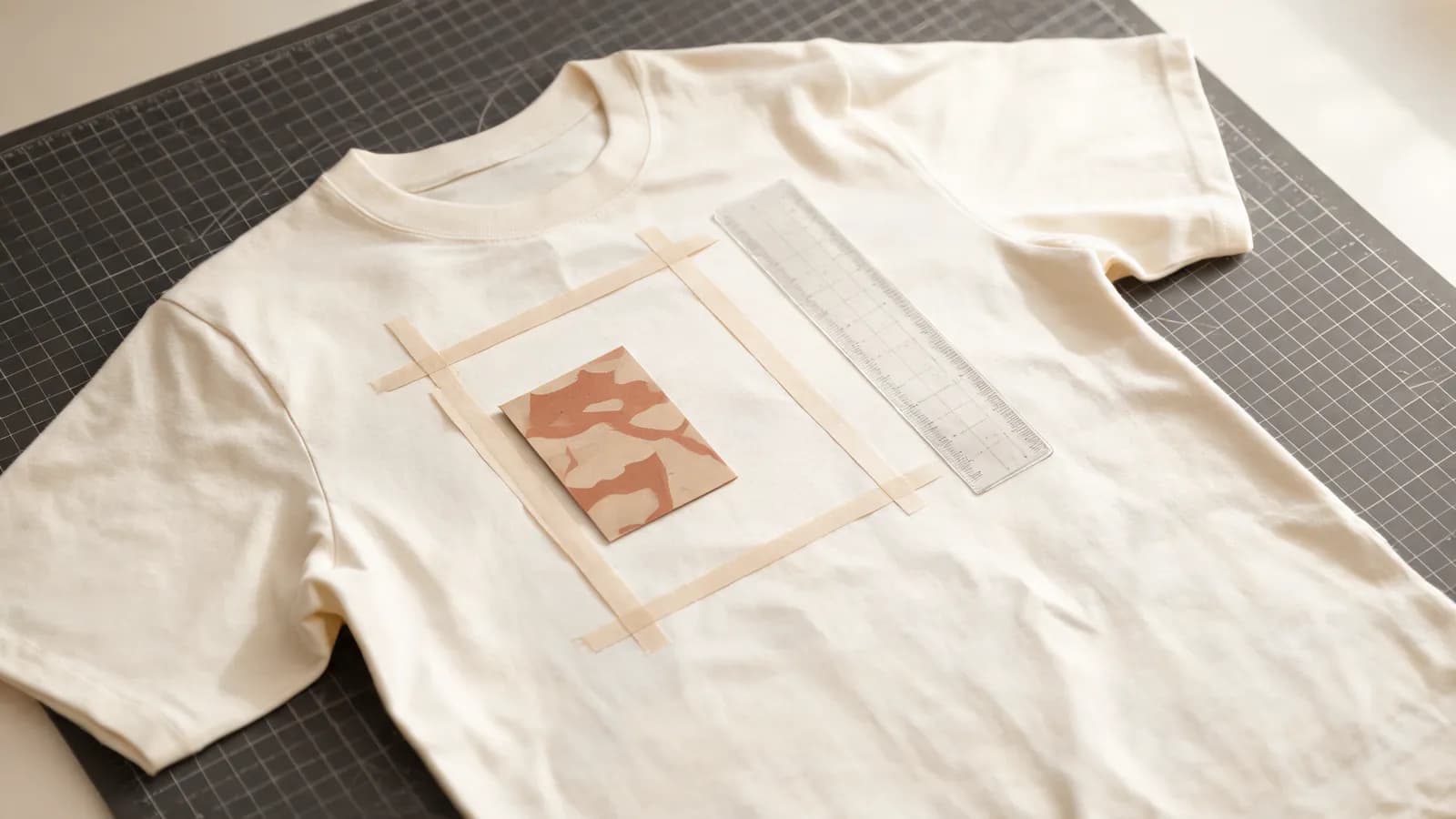
Most custom apparel that "looks off" fails on placement, not artwork. The graphic itself is fine — it is simply too large, too high, or sitting in a spot the eye does not expect. Placement conventions exist because decades of garment decoration have settled where designs read naturally on a body.
You do not have to follow every convention, but you should know them before you break them.
The standard positions
For tees, sweatshirts, and hoodies, five placements cover the vast majority of designs:
- Center chest / full front. The default for a primary graphic. Typical width is 25–35 cm, with the top of the design starting about 7–10 cm below the collar seam.
- Left chest. The classic logo position, mirroring where a pocket would sit. Keep it small: 7–10 cm wide reads as intentional; larger starts to fight the garment.
- Full back. The largest canvas, typically 30–35 cm wide, centered between the shoulder blades and below.
- Upper back / yoke. A wordmark or small graphic centered 5–10 cm below the back collar seam. Works well paired with a left-chest front.
- Sleeve. A narrow strip or small emblem, usually 5–8 cm wide. Sleeve prints add perceived value but sit close to seams, so simple shapes work best.
Details like hem tags, cuff marks, and collar-adjacent accents are effective too, but treat them as accents supporting one clear primary placement — a garment with three competing focal points has none.
Measure from fixed reference points
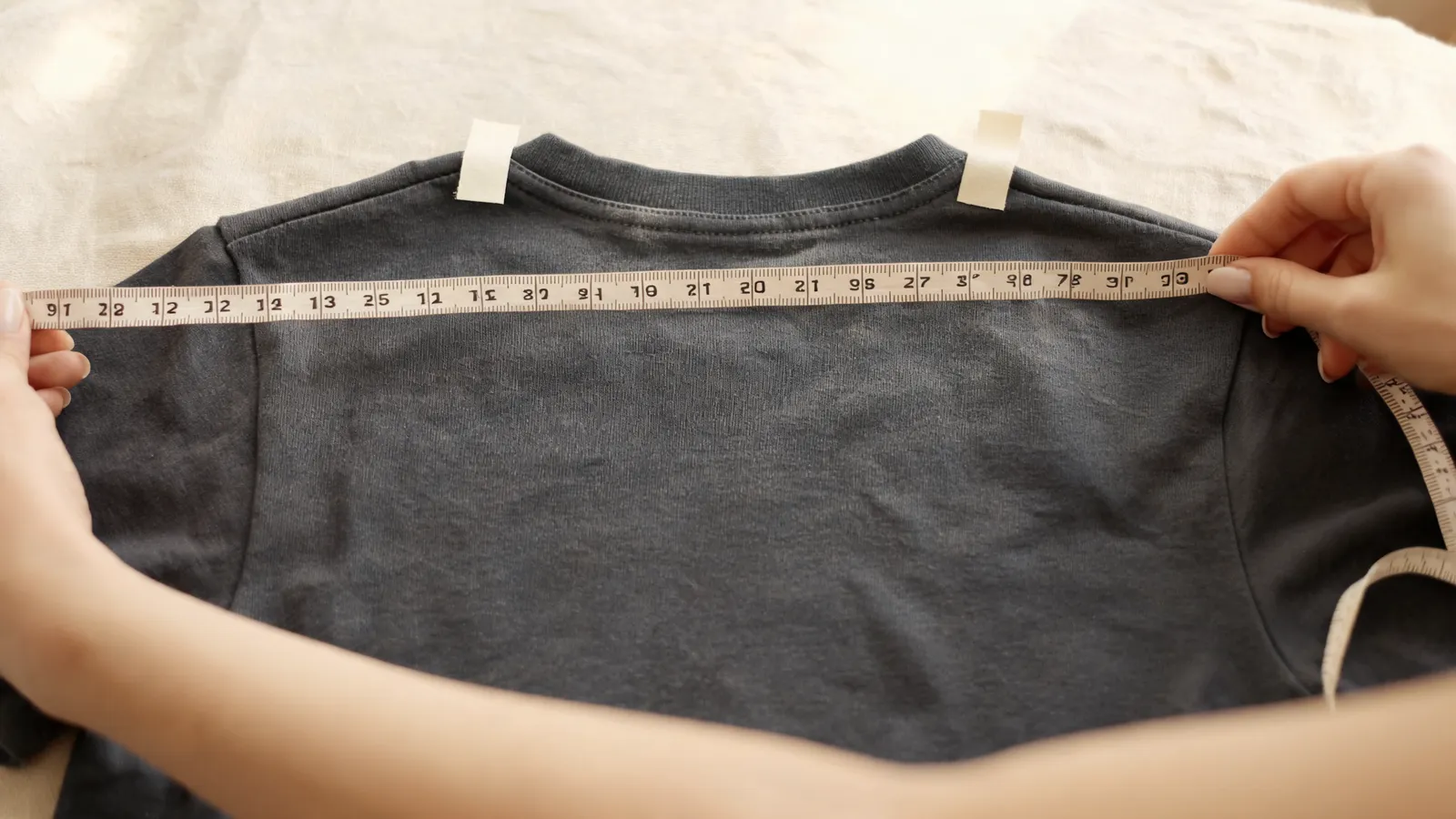
Placement is always measured from garment landmarks, not from edges of a photo. The two that matter most are the collar seam (vertical reference for chest and yoke placements) and the center line of the garment (horizontal centering). A design "centered on the chest" means centered on the garment's center line, starting a set distance below the collar seam — not eyeballed against a flat-lay photograph.
One artwork, many garment sizes
A single print size is normally used across the whole size run. A 30 cm graphic fills the chest of a size S but leaves generous margins on a 3XL — that is expected and accepted in production. What you should check is the extremes: make sure the design does not crowd the armhole seams on your smallest size, and still reads as deliberate (not shrunken) on your largest.
If your size range is very wide, sizing the artwork for the middle of the run is the safest compromise.
Respect seams, zippers, and edges
Decoration behaves best on flat, uninterrupted fabric. Printing across side seams, shoulder seams, zippers, or thick hems is possible with some techniques but adds cost, risk, and visible distortion. Hood seams and pocket edges on hoodies deserve special attention: a chest graphic on a hoodie usually sits higher and smaller than on a tee because the pocket eats into the canvas.
Embroidery has its own limits near edges — dense stitching close to a hem or collar can pucker the surrounding fabric.
Preview before you commit
Numbers get you close; eyes make the final call. When you design in Free Customization, place and scale each print on the garment surface, then use the craft-effect and try-on previews to judge how the placement reads at real proportions on a person. Scale problems that hide in a flat mockup — a chest mark slightly too large, back art riding too high — become obvious immediately. For how each decoration method constrains size and detail, browse the craft library.
Frequently asked questions
- How big should a left chest logo be?
- Keep it between 7 and 10 cm wide, positioned where a pocket would sit. Larger left-chest marks start to compete with the garment instead of reading as a deliberate logo placement.
- Where should a center chest design start?
- Typically 7-10 cm below the collar seam, centered on the garment's center line, at 25-35 cm wide for tees and sweatshirts. On hoodies it usually sits higher and smaller because the front pocket reduces the printable canvas.
- Does the print size change with the garment size?
- Usually not - one artwork size is used across the whole size run, so the design fills a size S chest more than a 3XL. Check the extremes of your run: the art should not crowd armhole seams on the smallest size and should still read as deliberate on the largest.