

Dropshipping vs Holding Inventory: Which Fits Your Shopify Apparel Brand?
How the two fulfillment models trade off cash, control, and speed, and why batch production combined with per-order dropshipping captures the best of both.
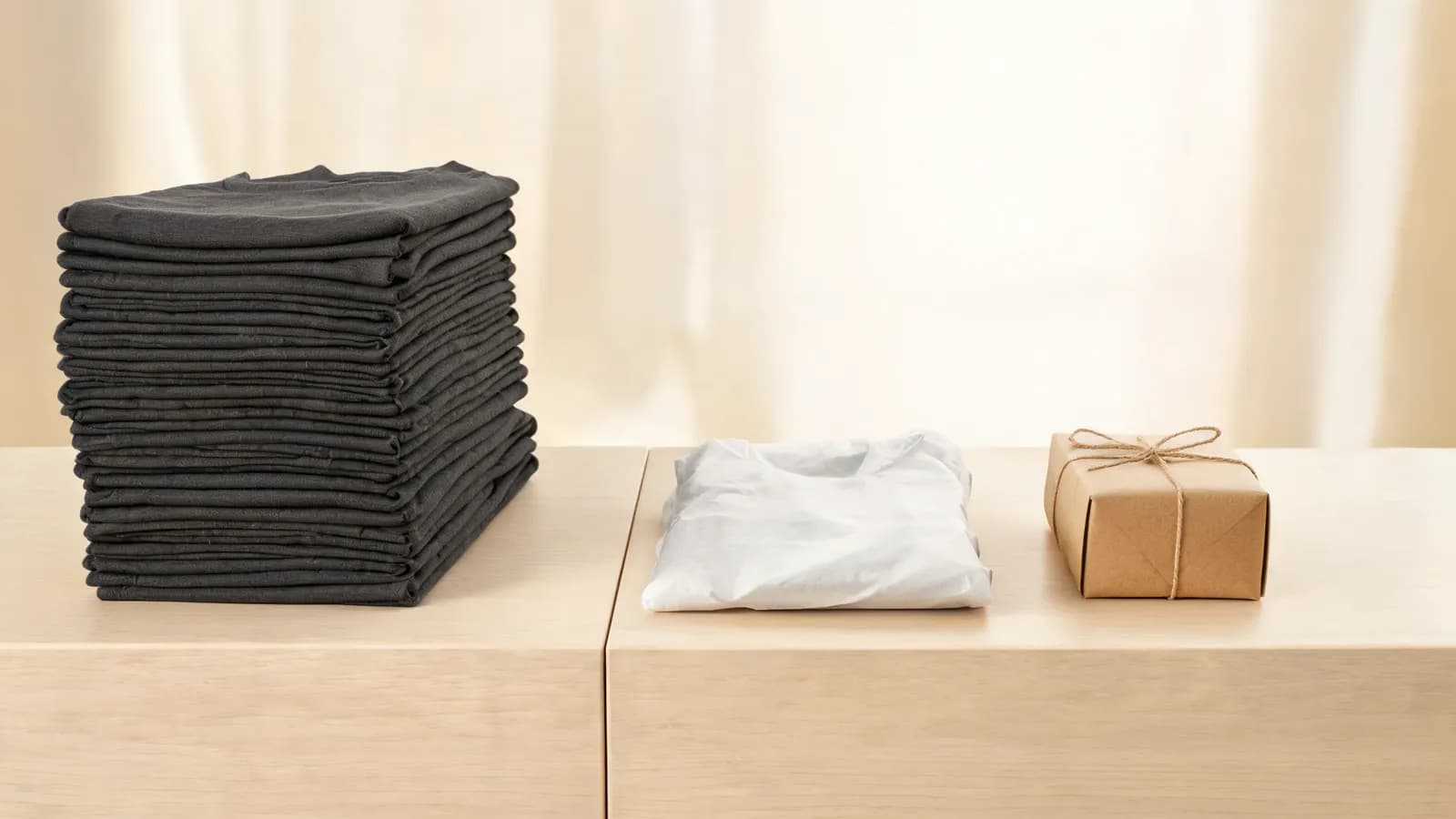
Every apparel brand that sells online eventually faces the same operational fork: hold your own inventory, or have someone else ship each order for you. For Shopify sellers the question is sharper still, because the storefront is easy — it is the garments, the boxes, and the cash tied up in them that decide whether the business works.
Neither model is universally right. They trade off cash, control, and speed in opposite directions.
The two models in one paragraph each
Holding inventory means producing in bulk, receiving the stock yourself (or in your own rented space), and packing every order as it comes in. You own the stock, the storage problem, and the shipping run to the post office — and you capture the full margin between bulk production cost and retail price.
Dropshipping means orders placed in your store are fulfilled directly to your customer by a partner, without the goods ever passing through your hands. You trade some margin and control for the removal of warehousing, packing labor, and upfront stock in your living room.
Cash flow and risk
Inventory is frozen cash. A 300-unit production run at bulk pricing gives you the best unit economics available, but the capital sits folded on a shelf until customers arrive — and unsold sizes are pure loss. This is the classic failure mode of first-time brands: great margin per unit, no cash left to market the product.
Pure per-order production inverts the risk: nothing is made before it is sold, so dead stock is impossible, but each unit costs meaningfully more and per-order production limits which decoration techniques and quality checks are economical.
There is a third shape between the extremes: produce in bulk once, then let a fulfillment operation ship per order from that stock. You keep bulk unit economics and consistent, sample-verified quality, while outsourcing the storage and the daily packing. This batch-then-dropship model is how Labelix supports Shopify sellers — production runs are warehoused after quality checks, and individual orders ship to end customers from that stock. The mechanics are covered in Shopify Dropshipping with Labelix.

Control, quality, and customer experience
Holding stock yourself gives you total control over folding, packaging, inserts, and dispatch timing — valuable if unboxing is central to your brand. It also means every quality problem is discovered by you, one parcel at a time, at 11pm.
Outsourced fulfillment standardizes the experience: consistent packing, tracked dispatch, and no dependence on your personal schedule. The control you give up can be partly recovered through branded packaging and labeling arranged with the production run, so the parcel still reads as yours.
When each model fits
- Testing a new design or audience? Keep commitments small and flexible; do not fill a garage to validate an idea.
- Proven sellers with steady velocity? Bulk production plus outsourced per-order fulfillment usually wins: bulk margins without the packing table.
- Unboxing-first premium brands at low volume? Self-fulfillment may be worth the labor while volume is small enough to enjoy it.
- Scaling internationally? Outsourced fulfillment wins decisively — cross-border shipping, customs paperwork, and carrier selection are a full-time craft.
The honest answer for most growing Shopify apparel brands is a sequence, not a choice: self-fulfill while learning, then move to batch-then-dropship as soon as packing time competes with the work that actually grows the brand.
Frequently asked questions
- Is dropshipping or holding inventory better for a new apparel brand?
- While testing designs and audiences, keep commitments small and flexible rather than filling a garage with stock. Once a design proves steady velocity, bulk production combined with outsourced per-order fulfillment usually wins: bulk unit economics without the daily packing labor.
- What is the batch-then-dropship model?
- You produce one bulk run at bulk pricing, the stock is warehoused after quality checks, and individual store orders ship to end customers from that stock. It keeps bulk margins and sample-verified consistency while outsourcing storage and packing - this is how Labelix supports Shopify sellers.
- Do I lose my brand experience with outsourced fulfillment?
- Some hands-on control goes away, but much of it can be recovered by arranging branded packaging, neck labels, and hang tags with the production run, so parcels still arrive reading as your brand - with consistent packing and tracked dispatch included.