

Neck Labels and Hang Tags: Small Details That Finish a Brand
Why relabeling turns merchandise into a product, the differences between woven, printed and tagless labels, what makes a hang tag work, and when the investment pays.
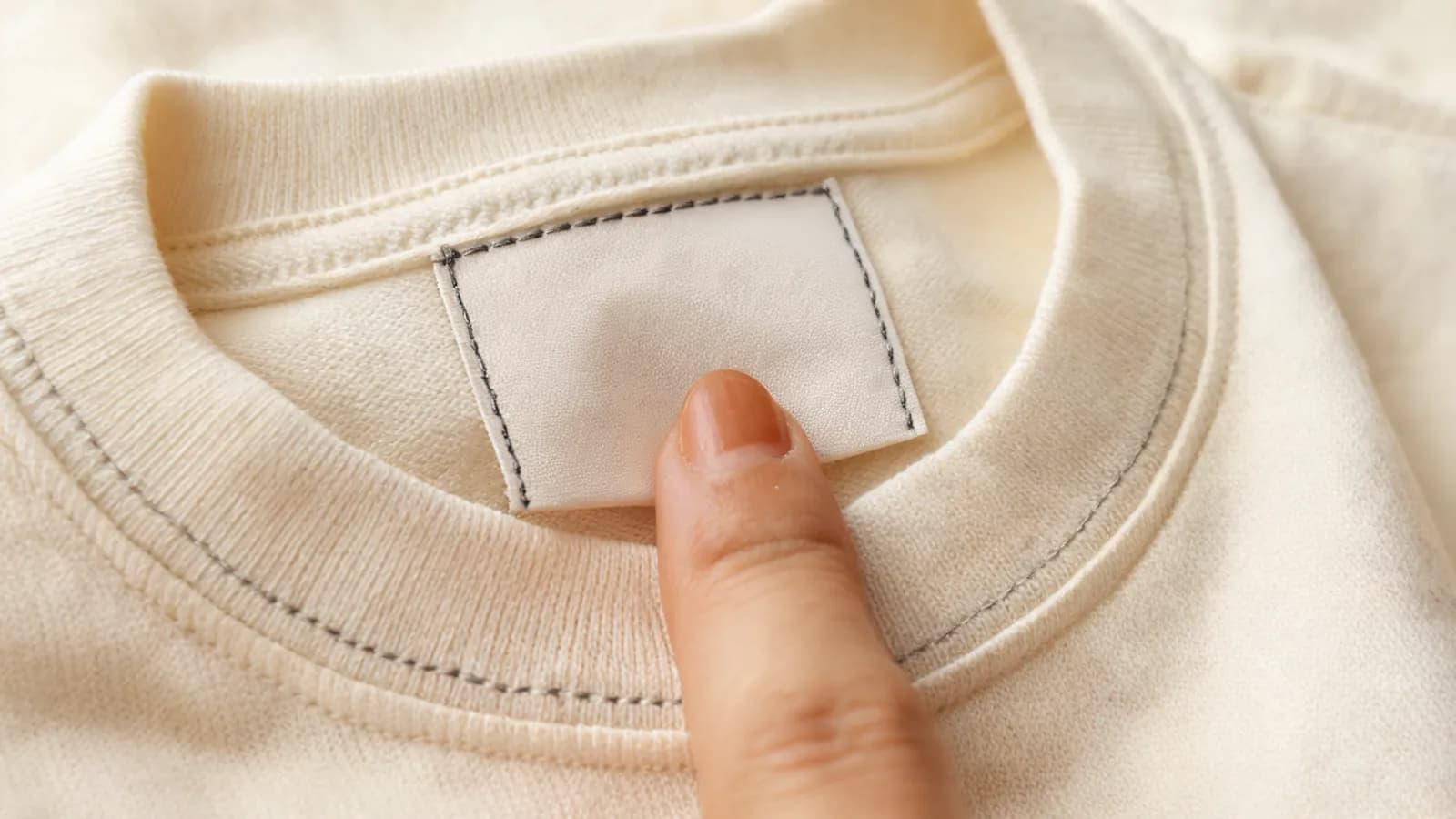
Customers rarely mention the neck label or the hang tag — until they are missing. A garment with a beautiful print but a generic manufacturer's label still reads as "customized merchandise". The same garment with your own label at the collar and a considered tag on the seam reads as a product from a real brand.
These two small components are the cheapest credibility upgrade in apparel, and they are usually the last thing new brands think about.
What a neck label does
The neck label is the piece your customer sees every time they put the garment on. It carries your identity into the most private moment of ownership — long after packaging is discarded and the purchase forgotten.
Functionally, a label typically carries the brand mark, the size, fiber content, care symbols, and country of origin. Many regions have labeling regulations for fiber content and care information on garments sold at retail, so if you sell into a regulated market, check the local requirements before finalizing label artwork.
The three common constructions each have a distinct character:
- Woven labels are the classic choice: thread woven into a small badge, durable and dimensional, with a premium feel. Fine text has a minimum size below which weaving loses detail.
- Printed fabric labels (usually satin or cotton) reproduce fine print and small type accurately, at the cost of a flatter, less tactile presence.
- Heat-transfer ("tagless") labels print directly onto the inner fabric. They eliminate the itch factor entirely and suit performance wear and baby clothing, but they fade gradually with washing.
What a hang tag does
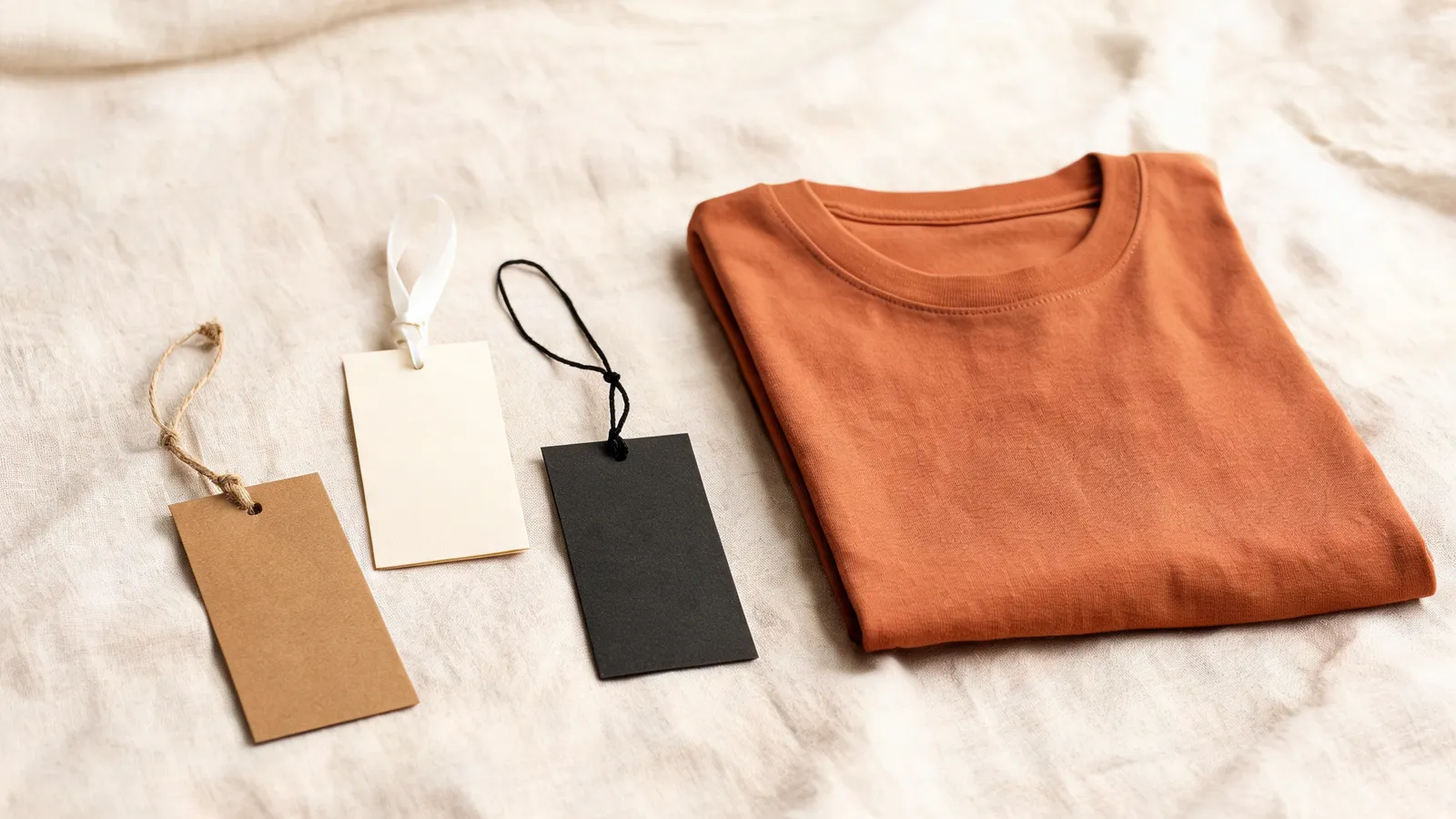
A hang tag is marketing, not construction. It exists for the few seconds between first touch and first wear: it signals price positioning, tells a compressed brand story, and photographs well in unboxing content.
Effective tags are ruthlessly simple — a logo on one face, and at most one short message, a size marker, or a QR code to your story page on the other. Material choices (thick kraft, cotton-textured card, a fabric swatch tag) and the string itself (cotton twine, satin ribbon, a safety pin) do more branding work than additional text ever will.
When to invest, and when to wait
Not every order needs custom labeling. A reasonable progression for a growing brand:
- Validation runs — keep the stock label, spend your budget on product and artwork.
- First real collection — add a woven or printed neck label; it is the strongest signal per unit of cost.
- Retail or premium positioning — add hang tags and coordinated packaging so shelf presence and unboxing match the price point.
The economics favor batches: labels and tags are produced in runs, so their per-unit cost falls quickly at the quantities where custom apparel production already makes sense.
Labeling on Labelix orders
On qualifying bulk orders, Labelix can arrange custom neck labels and hang tags as add-on services alongside garment production, executed through our fulfillment partners — mention labeling requirements in your custom request notes and the details are settled during the quotation stage, where these services are priced by a human reviewer rather than an automatic matrix.
Design-wise, treat the label and tag as part of the same system as your prints: same logo construction, same tone. A brand that matches at the collar, the chest, and the tag feels finished. For the garment side of that system, start with Free Customization.
Frequently asked questions
- What is the difference between woven, printed, and tagless neck labels?
- Woven labels are thread woven into a durable, dimensional badge with a premium feel but limited fine detail. Printed satin or cotton labels reproduce small type accurately but feel flatter. Heat-transfer tagless labels print directly on the fabric, eliminating itch, though they fade gradually with washing.
- What information legally has to be on a garment label?
- Many regions require fiber content, care instructions, and country of origin on garments sold at retail, and the exact rules vary by market. If you sell into a regulated market, check its labeling requirements before finalizing your label artwork.
- Can Labelix add my own neck labels and hang tags to an order?
- On qualifying bulk orders, custom neck labels and hang tags can be arranged as add-on services alongside garment production, executed through Labelix's fulfillment partners. Mention labeling requirements in your custom request notes and the details are settled during the manual quotation stage.