

Apparel Decoration Techniques: Choosing the Right Craft for Your Design
Understand how print, embroidery, raised textures, metallic finishes, reflective effects, and specialty crafts change the look and production needs of apparel.
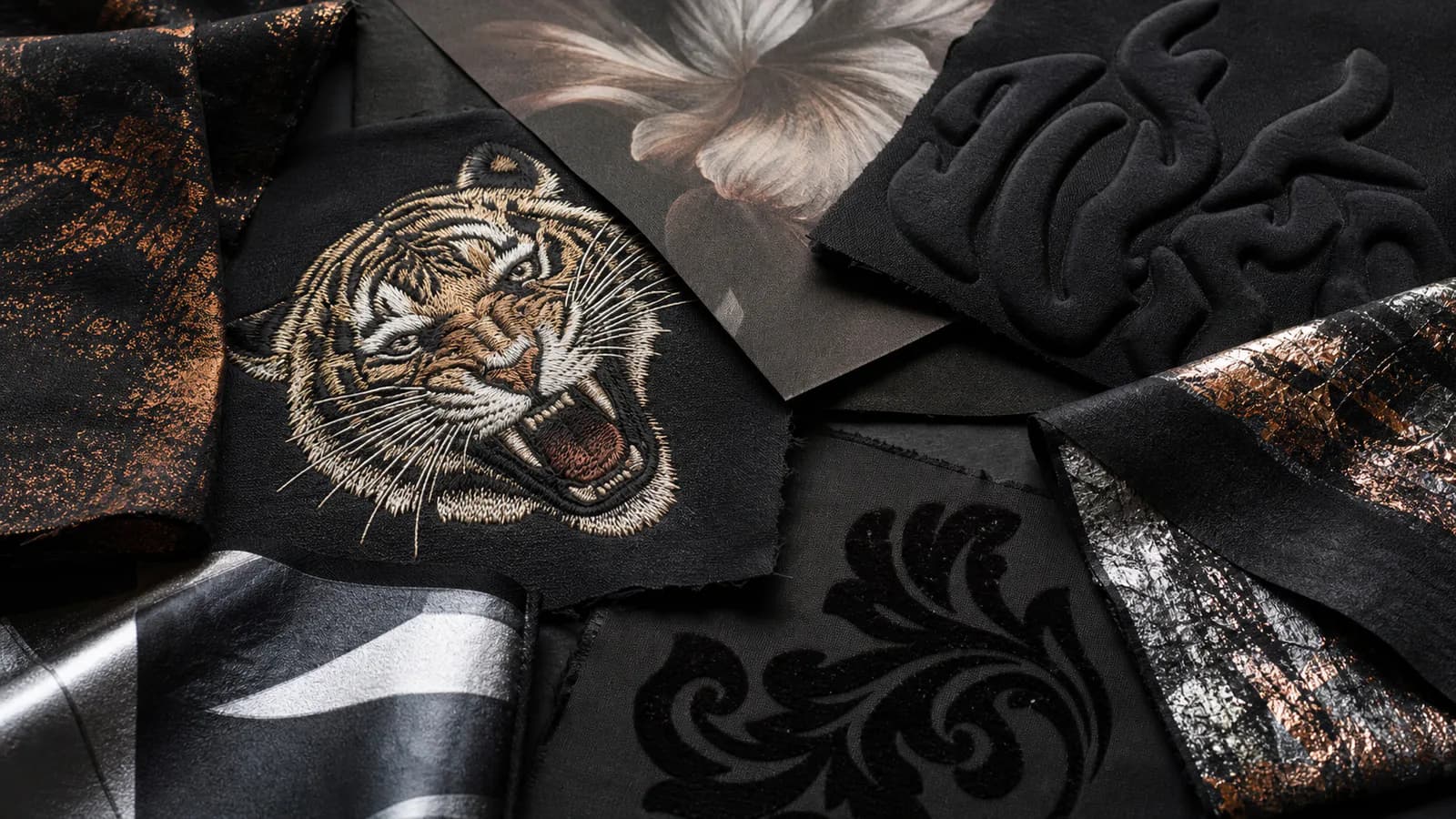
Decoration is not a finishing detail added after design. It changes how artwork should be drawn, how it interacts with fabric, what it feels like to wear, and how the garment must be produced.
The Labelix craft library can evolve as new techniques become available, so the best way to choose is by desired effect rather than by memorizing a fixed list.
Begin with the visual behavior
Ask what the artwork needs to do on the garment.
- Smooth color and detail: Digital printing can support detailed imagery and tonal transitions when the artwork and fabric are suitable.
- Bold separated colors: Screen printing is often associated with strong graphic shapes and repeatable spot-color applications.
- Applied graphic layers: Heat-transfer methods place a prepared graphic onto the garment and can work well for controlled shapes and color.
- Stitched structure: Embroidery turns the design into thread, adding relief, durability, and a premium tactile character.
A method that looks ideal on a screen may not be ideal for a soft, highly elastic, lightweight, or heavily textured fabric. Product and craft must be considered together.
Use texture intentionally
Raised and tactile techniques are most effective when texture is part of the concept.
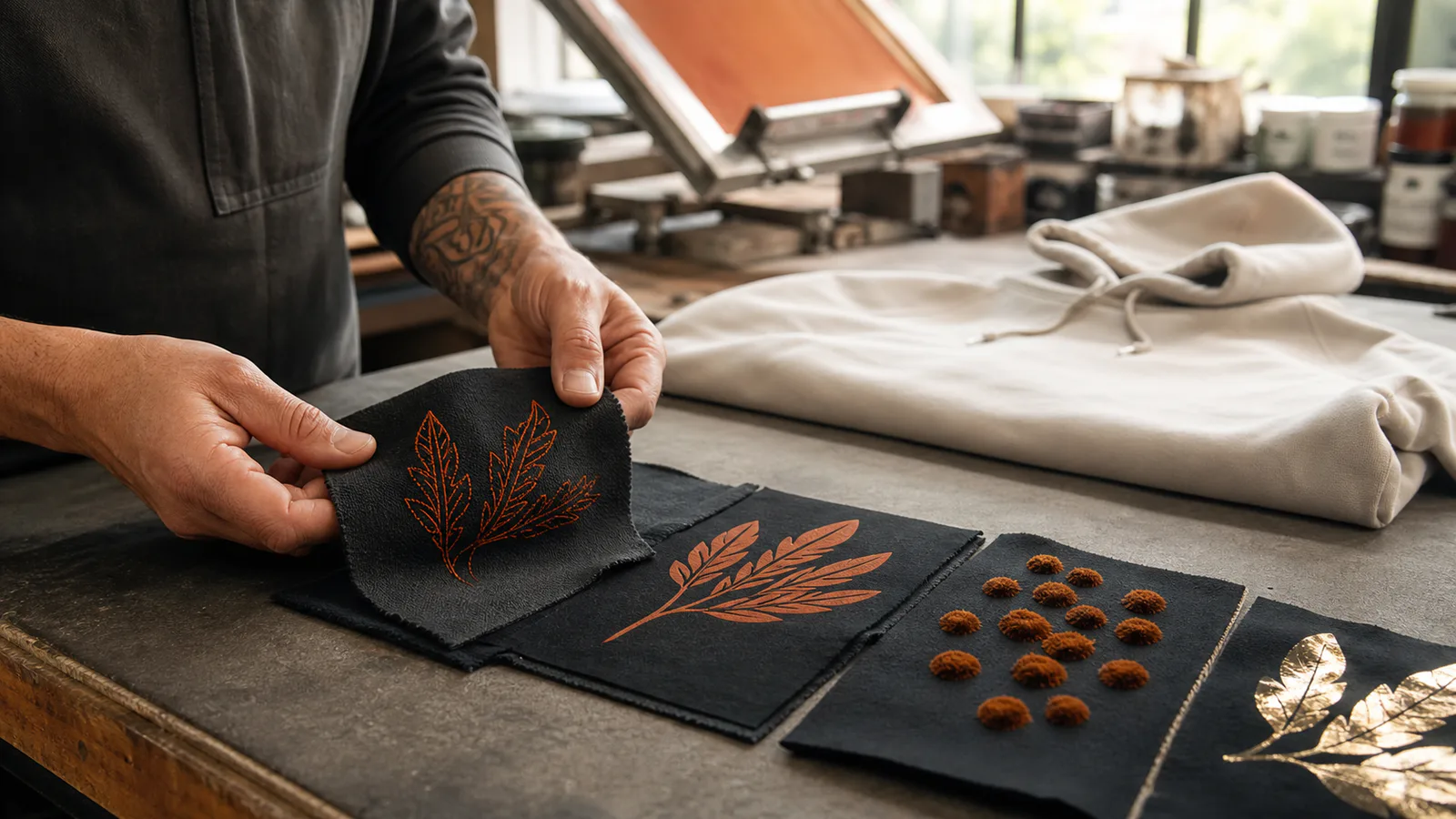
Puff printing builds dimension above the fabric. It can make simple lettering or bold shapes feel substantial, but very fine details may not translate with the same clarity. Flock printing creates a soft, fiber-like surface that changes both appearance and hand feel.
Embroidery also adds physical depth, but it does so through stitch direction, thread density, and the way the fabric is stabilized. A compact emblem may suit embroidery better than a large photographic image.
Treat metallic and reactive finishes as materials
Gold- and silver-foil effects catch directional light and can create sharp statement details. Reflective printing is designed to respond strongly under certain lighting conditions. Thermochromic effects can change appearance with temperature.
These finishes should be used with a clear purpose. A specialty effect across every large area can overwhelm the garment, increase complexity, or behave differently across folds and seams. Often, one controlled accent is more convincing than full coverage.
Because lighting and environment affect these techniques, a still preview cannot show every real-world condition. Review the intended placement and ask whether the effect supports the garment in ordinary use, not only in a dramatic product image.
Match artwork structure to the craft
Different techniques reward different source files:
- Fine tonal artwork generally needs a process capable of carrying those transitions.
- Embroidery benefits from simplified shapes, adequate spacing, and clear hierarchy.
- Puff and flock effects benefit from areas large enough for the texture to read.
- Foil and reflective accents need intentional boundaries and placement.
- Screen-based methods benefit from artwork that can be separated cleanly.
Do not choose a technique first and force unsuitable artwork into it. Adjust the artwork and the craft together.
Consider placement, area, and quantity
Craft pricing and feasibility may vary by print area, quantity range, product material, and production setup. The same small mark and full-front graphic should not be treated as equivalent simply because they use the same named technique.
If a request contains multiple prints, evaluate each print independently. A garment can combine a stitched chest mark with a printed back graphic when the design calls for it. Each surface and print should preserve its own artwork, placement, and craft selection.
Some crafts may also have minimum quantities, sample fees, or production-day guidance. These rules depend on current platform settings and the specific quote; do not assume a universal threshold from a general article.
Preview, then verify the quote
Where available, Labelix can generate an AI craft-effect image based on the selected technique and source artwork. This is useful for creative review and for communicating intent. It is not a physical sample and should not be treated as proof of exact color, texture, reflectivity, or stitch construction.
The published quote and production communication remain the source of truth for what will be made. Use previews to find the right direction, then review the request details carefully before acceptance.
Explore current options in the craft library, then apply the selected method inside a product custom-print flow or Free Customization.
Frequently asked questions
- Should I pick a decoration method by name?
- Better to pick by the visual behavior you need — smooth tonal detail, bold separated colors, applied graphic layers, or stitched structure. The craft library changes as techniques become available, so a name memorized from a previous project is a weaker guide than the effect you are trying to achieve.
- Can one garment combine embroidery and printing?
- Yes. A stitched chest mark and a printed back graphic can coexist when the design calls for it. Each print keeps its own artwork, placement, and craft selection, and each should be evaluated independently rather than treated as one decoration decision.
- Should a metallic or reflective finish cover the whole design?
- Usually not. Specialty finishes respond to light and behave differently across folds and seams, so full coverage can overwhelm the garment and add complexity. One controlled accent is often more convincing, and the effect should be judged in ordinary use rather than only in a dramatic product image.