

Checkout Explained: Address, Shipping Method, and Why You Calculate First
Checkout asks for an address, a shipping method, and a calculated shipping quote—in that order. Each step narrows what the next one can be.

Checkout on Labelix asks for three things in a fixed order: a shipping address, a shipping method, and a calculated shipping quote. The order is not cosmetic—each step narrows what the next one can be.
Understanding why the sequence exists is what prevents the most common checkout frustration: calculating shipping, changing something, and wondering why the figure has to be recalculated.
The address is a pricing input, not a formality
The destination is one of the largest variables in what shipping costs.
Distance is the obvious part. Less obvious is that the destination country determines the available carriers, the customs treatment, and sometimes whether a route is available at all. An address entered carelessly does not just risk a misdelivery—it produces a shipping figure for a journey you did not intend to buy.
Confirm the destination before you calculate anything, not after.
Direct Shipping and Drop Shipping solve different problems
The two shipping methods exist for two different fulfillment shapes.
- Direct Shipping sends the order to the address you provide. This is the normal choice when the goods are going to you, your studio, or a single recipient.
- Drop Shipping routes the order through a warehouse, which is why selecting a warehouse is required before the order can be created. It suits sellers fulfilling to end customers rather than receiving stock themselves.
If you select drop shipping without choosing a warehouse, checkout will stop and ask for one. That is a guard, not a bug—the route is undefined without it.
Why must shipping be calculated before the order exists?
Because the order is created against a specific shipping quote, not against an estimate you saw earlier.
Calculating produces a quote that is bound to the order you are about to create. This is what keeps the total you approved and the total the order records from drifting apart. It also means the sequence cannot be reversed: there is no way to create the order first and settle shipping afterwards.
What actually moves a shipping figure
Four things, roughly in order of impact:
- Destination — country and region, including customs handling.
- Weight — the real driver for dense goods.
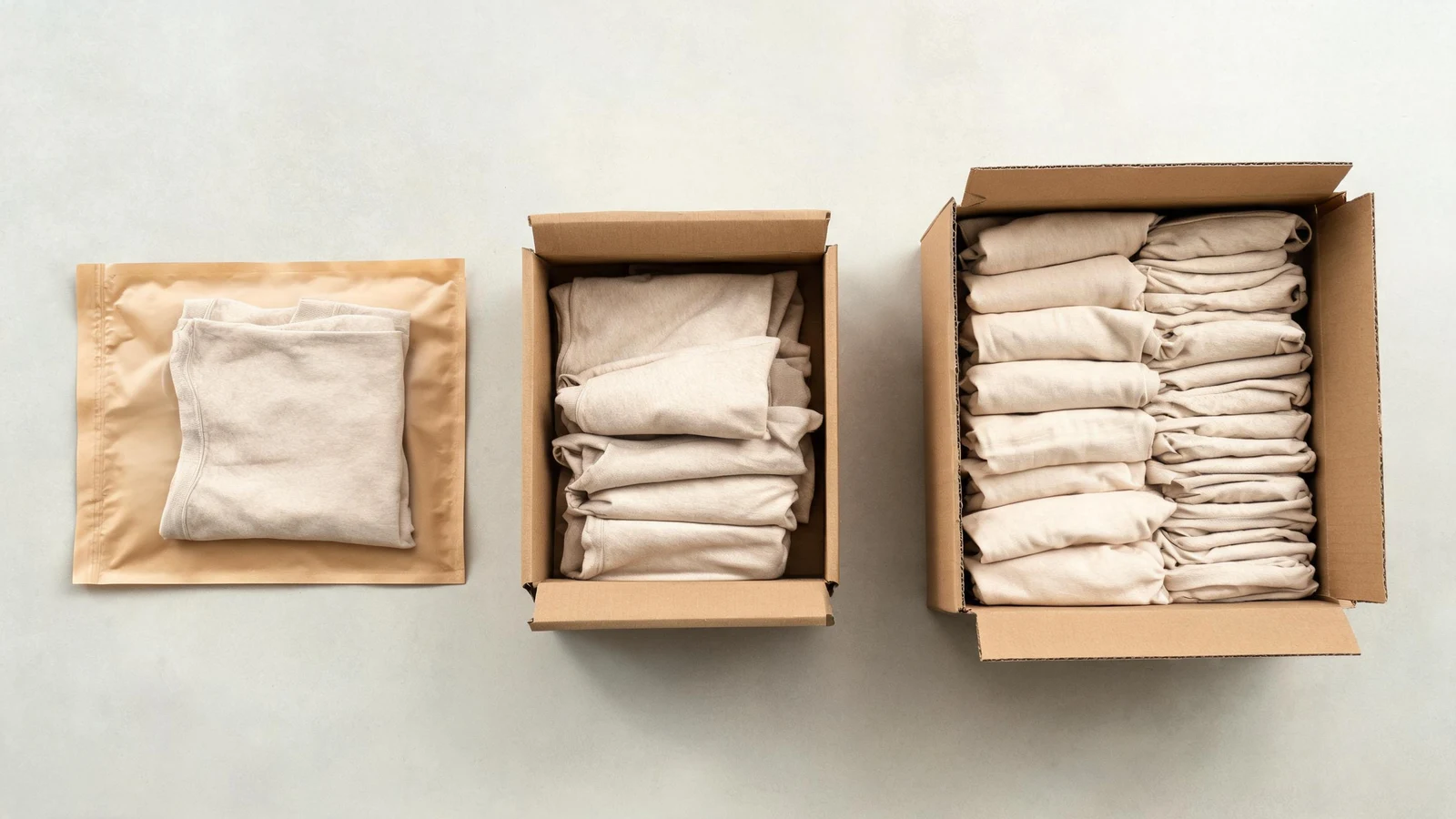
- Volume — the real driver for apparel, which is light and bulky. Fleece and outerwear cost more to ship than their weight suggests.
- Packing — how the goods are consolidated into parcels.
This is why a heavier fabric choice made early in the design has a shipping consequence at the end. Weight and volume are decided at the blank, not at checkout.
Recalculate whenever something upstream changes
Change the address, the method, the warehouse, or the quantity, and the previous calculation no longer describes what you are buying.
Recalculating is cheap and takes seconds. Assuming a stale figure still applies is the one habit that reliably produces an unpleasant total. If checkout asks you to calculate again, something that affects the price actually changed.
Before you confirm
Read the destination one more time. Confirm the method matches how the goods should travel. Check that the shipping figure was calculated after your last edit, not before it.
Some requests will need manual review before shipping can be settled—large orders, unusual destinations, or consolidated shipments do not always resolve automatically. That is a normal path, and it is better resolved before an order exists than after.
For the policy detail behind all of this—scope, customs, delays, and compensation—see the Shipping Policy.
Frequently asked questions
- Why do I have to calculate shipping before the order is created?
- Because the order is created against a specific shipping quote rather than an estimate you saw earlier. Binding the two keeps the total you approved and the total the order records from drifting apart, so the sequence cannot be reversed.
- What is the difference between Direct Shipping and Drop Shipping?
- Direct Shipping sends the order to the address you provide, which suits goods coming to you or a single recipient. Drop Shipping routes the order through a warehouse, which is why selecting a warehouse is required before the order can be created.
- Why did my shipping cost change after I edited the order?
- Changing the address, method, warehouse, or quantity means the earlier calculation no longer describes what you are buying. Recalculating takes seconds; assuming a stale figure still applies is what produces an unpleasant total.